
Naval Postgraduate School
Calendar | Directory
banner
Pakistan’s Evolution as a Nuclear Weapons State

Pakistan’s Evolution as a Nuclear Weapons State 

Lt. Gen. Khalid Kidwai’s CCC Address

by Robin Walker

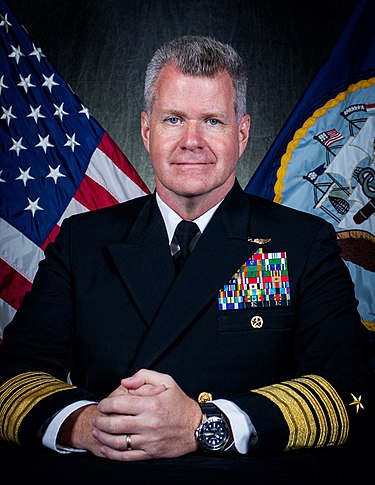
November 1, 2006−Monterey, California:The Director General of Pakistan’s Strategic Plans Division (SPD), Lt. Gen. Khalid Kidwai, presented a special guest lecture to the faculty, students, and guests of the Naval Postgraduate School on 27 October 2006. Organized by the Center for Contemporary Conflict, Lt. Gen. Kidwai provided a remarkably candid address on the current status of Pakistan’s nuclear weapons program and the challenges it faces as a new nuclear power.
Lt. Gen. Khalid Kidwai

Lt. Gen. Kidwai commenced his lecture by acknowledging some of the often-heard concerns over Pakistan’s nuclear command and control structure from both Pakistan’s friends and enemies. He explained that a large information gap and general lack of official communication about the Pakistani nuclear program had led to a snowballing effect of worry about the issues of safety and security of Pakistan’s nuclear facilities, technology, and materials.

He recognized the nightmare of Pakistani nuclear weapons falling into the hands of religious extremists, stressed the extraordinary steps Pakistan has been making to secure its nuclear arsenal and weapons production program since even before the September 11 terrorist attacks or the irresponsible actions of Pakistani scientist Dr. A.Q. Khan, and explained his speaking tour in the United States was intended to present the truth, correct some misconceptions, and address the concerns of the American intellectual community.

Lt. Gen. Kidwai explained that the Indian subcontinent in general, and Pakistan in particular, have a long history of peaceful social and political relations, and argued that the overwhelming majority of Pakistani society is comprised of moderates who reject extremism. Because of this peaceful history, Pakistan did not go nuclear for any aggressive purpose, but instead was forced to develop nuclear weapons in order to protect itself from India following the 1971 Bangladesh war and India’s “peaceful” nuclear explosion. Lt. Gen. Kidwai described Pakistan’s current nuclear strategy is defensive rather than aggressive, and observed that it is based on credible minimum deterrence and driven by security concerns, not great power ambitions.

Following Pakistan’s May 1998 nuclear tests, the Pakistani nuclear program faced three major challenges: (1) the need to manage the nuclear program in an institutional way, (2) the need to review the range of national security policies, and (3) the need for an effective and prudent force development strategy.

Additionally Pakistan faced difficulties due to the geographical and technological specifics in South Asia, including the ongoing military competition with India over the Line of Control in Kashmir, the lack of strategic depth and inadequacies of an assured second strike that made Pakistani strategic assets relatively vulnerable, and the inadequacy of real-time surveillance and early warning on both sides that make strategic miscalculations more likely.

On the other hand, weaponization of the Indian and Pakistani nuclear capabilities has created a strategic balance in South Asia, which is a deterrent to large-scale war. Conflict resolution now has greater significance, and has increased the need for a durable resolution to the Kashmir dispute. On top of this, Lt. Gen. Kidwai viewed the U.S.-Indian civilian nuclear deal as an unhelpful development, since it creates an exception to nonproliferation rules and norms based on one country, rather on specific criteria or energy needs, which should qualify Pakistan for peaceful nuclear assistance as well.

CCC Director Peter Lavoy and Lt. Gen. Khalid Kidwai

Pakistan has dealt with these formidable challenges by developing a nuclear policy based on restraint and responsibility with four salient features: (1) deterrence of all forms of external aggression; (2) ability to deter a counterstrike against strategic assets; (3) stabilization of strategic deterrence in South Asia; and (4) conventional and strategic deterrence methods.

The Pakistani nuclear command and control organization consists of three branches: (1) the National Command Authority (NCA), consisting of the country’s ten highest decision makers; (2) the Strategic Plans Division (SPD), which is the secretariat to the NCA and is in charge of developing and managing Pakistan’s nuclear capability in all dimensions; and (3) the Strategic Forces Command (SFC) for each branch of the military, which is responsible for planning and control as well as operational directives for nuclear weapons deployment and use.

While Lt. Gen. Kidwai understandably was only able to provide vague details about operational matters and additional safety and security measures on Pakistani nuclear weapons, he did assure the audience that Pakistani nuclear controls include some functional equivalent to the two-man rule and permissive action links (PALs) that the United States and some other nuclear-weapons states rely on to protect against loss of control, inadvertent weapons use, accidents, and other mishaps.

Lt. Gen. Kidwai also discussed the programs developed by the Pakistan Nuclear Regulatory Authority (PNRA) to enhance safety, security, and accountability of all Pakistani nuclear weapons, facilities, and materials. Kidwai stressed the safety of Pakistan’s weapons, reminded the audience that “ South Asia is not a U.S.-U.S.S.R model with weapons on hair triggers.”

Lt. Gen. Kidwai acknowledged Pakistan’s poor record on nuclear proliferation, but stated assertively that this was due to the illegal actions of one rogue individual, A.Q. Khan, who has been dealt with. Pakistan has, on its own, put into place strong measures to ensure that similar loss of control and secondary proliferation will never happen again. Lt. Gen. Kidwai asked, “How long will Pakistan be punished for the actions of one rogue individual?” He stressed that Pakistan is an important ally on the front line in the fight against terrorism, and that the United States needs to move on to show that it does not discriminate against Pakistan. Additionally Pakistan has a large and growing need for nuclear energy, with a goal of going from its current 19,500 megawatts per year to 163,000 megawatts in the next 25 years. Because Pakistan does not have a nuclear industry in the private sector, Lt. Gen. Kidwai stated that there would be no danger of nuclear technology leaking into the wrong hands.

Lt. Gen. Kidwai concluded by saying that Pakistan desires a world where it would not need to possess nuclear weapons, but due to the actions of hostile countries in the region, that eventuality seems unlikely. However, Pakistan’s Nuclear Command Authority will ensure that Pakistan’s nuclear weapons will never pose a threat to world security through use or proliferation.

Lt. Gen. Khalid Kidwai and experts at a faculty roundtable discussion

Lt. Gen. Kidwai also answered several questions from the audience from students, faculty and guests, and engaged in a roundtable discussion with experts from NPS and nearby universities.

CCC Director Peter Lavoy presenting Lt. Gen. Kidwai with a token of appreciation.

This is an official U.S. Navy website.
All information contained herein has been approved for release by the NPS Public Affairs Officer.
Page Last Updated: Sep 20, 2011 10:31:54 AM | Contact the Webmaster