
NPS News Profile:
NPS Prof Publishes Groundbreaking Book on Bioweapons
By Barbara Honegger
Military Affairs Journalist
Monday, November 17, 2008
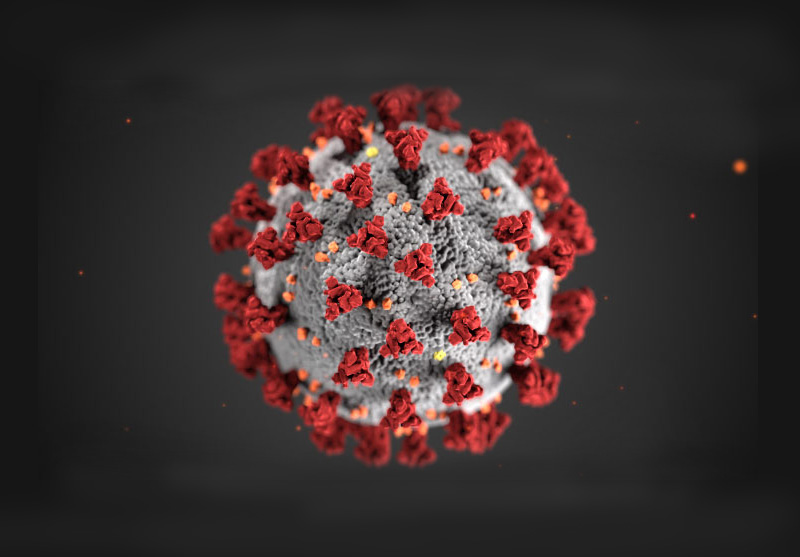
With Director of Homeland Security Michael Chertoff saying last month that he considers biological threats the most pressing and challenging security issue, two Naval Postgraduate School professors chose a propitious time to come out with a groundbreaking book on attributing blame for the use of biological warfare agents.
Terrorism, War, or Disease? Unraveling the Use of Biological Weapons is the product of a two-year research effort led by National Security Affairs Assistant Professor Anne L. Clunan, a specialist in state responses to novel and emerging security threats and former special assistant to the deputy director, Department of State Office of Soviet Union Affairs.

Also co-editor on the book is Peter R. Lavoy, formerly director of the NPS Center for Contemporary Conflict and National Security Affairs senior lecturer, currently serving as National Intelligence Officer for South Asia at the National Intelligence Council. The book, the first to rigorously examine the complex scientific, political, military, legal and policy challenges in determining when bioweapons have been used and who has used them, was published this year by Stanford University Press as part of its prestigious Security Studies series.
The anthology is a collection of historical case studies and essays by some of the world’s foremost authorities on the use of biological weapons by state and non-state actors and the policy and research implications of the significant challenges of identifying biological warfare agents; determining whether terrorism, warfare or naturally occurring disease is the source of a biological event; and attributing blame for intentional acts.
It presents the most comprehensive analysis to date of actual and alleged bioweapons use, including a current evaluation of law enforcement, forensic epidemiology and arms control measures available to policymakers to investigate and assign responsibility for suspected intentional acts.
The case studies include the 2001 anthrax letter attacks, the 1994 plague in India, Japan’s use of germ warfare in World War II, the “Yellow Rain” affair of the early 1980s, and historical examples of politically motivated state allegations of bioweapons use. Each chapter ends with a discussion of the key lessons learned for policy makers, lawmakers and scientific and criminal investigators on the rigorous steps required to credibly identify the perpetrator. Tables provide clearly organized reference information for researchers, policymakers and response planners, including the 31 alleged biological weapons episodes since 1900, their agent type, recorded rates of infection, human morbidity and mortality, and time required for identification.
“The idea for the book was Professor Lavoy’s when he was principal director for requirements, plans and counterproliferation policy in the Office of the Secretary of Defense,” said Clunan. “Pete became acutely aware of the difficulties of correctly figuring out who had used a biological warfare agent, and the glaring lack of any comprehensive work on the subject.
“Correctly attributing blame for a biological agent is extremely complex, as it requires three overlapping steps: identification of what agent is responsible for the symptoms or illness, characterization of the use of that agent as intentional or as an unintentional outbreak, and attribution – assignment of responsibility – of the use of the biological agent to a perpetrator,” Clunan explained. “Well-known examples of that difficulty are the 2001 U.S. anthrax attacks, which took one of the largest investigations in U.S. history and seven years before being able to identify a perpetrator, and the famous ‘yellow rain’ incidents in Asia, which still invoke controversy almost 35 years later, as recently declassified material suggests that some chemical or biological agent was intentionally used while most scientists reject that claim. In the case of Japan’s use of germ warfare programs during World War II, it took over 50 years to achieve official attribution, which didn’t happen until 2002, when Japanese courts conceded that Imperial Japan had engaged in biowarfare.
“To address this gap, Professor Lavoy organized a conference in 2006 at Kings College London on the identification, characterization and attribution of bioweapons use,” Clunan said. “The book’s chapters are selected papers from the conference. I led the effort to revise those papers and publish the anthology project, and our third editor, Professor Susan Martin of King’s College London, helped us to put on the symposium and produce the book. The three of us knew each other from graduate school in political science at U.C. Berkeley.”
Clunan summarized the “lessons learned” in researching and writing the book.
“The possibility of an attack using biological weapons is one of the biggest threats to U.S. and global security, and states’ defense and deterrence policies are based on the assumption that the perpetrator can be quickly and reliably identified,” she said. “But the enduring lesson from our research is that identification, characterization and attribution of bioweapon use are all very hard to do in a scientifically and legally credible manner. There’s rarely a smoking gun. Even when there is, as was the case with the U.S. anthrax attacks, and even with increasingly sophisticated intelligence and scientific and forensic capabilities, it can be very hard to get an actual sample of the suspected or alleged biological agent. And even if you do, it’s extremely difficult to trace it back to its source - to determine what state, group or individual is to blame - which makes any timely, accurately targeted state response highly problematic.
“The bottom line for policymakers is to favor and focus on consequence mitigation – on measures to prevent, resist and withstand the impact of a bio attack - and to strengthen existing laws and norms against the development and use of biological and toxin weapons,” Clunan stressed. “Deterrence by retaliation, even if you can identify the perpetrator within any reasonable period of time, is politically controversial and risky and isn’t as effective as preventive deterrence by denial – preventing significant consequences of an attack. Instead of deterring a potential attacker by the threat of physical punishment, the best defense is to have a robust public health and first responder system in place to protect your population from harm, which discourages attacks, and if one comes, significantly mitigates the health effects and any public panic.

“Other key lessons from the case studies and analyses are that robust national and transnational networking, information exchange, standard setting and collaboration among first responders, health workers, the biotech industry, academics and nonproliferation, intelligence and law enforcement officials is critical for successful mitigation and attribution,” Clunan concluded. ‘Scientific and legal standards of evidence are needed to withstand scrutiny in court and independent scientific and international review, yet the evidentiary requirements and priorities for law enforcement and scientific investigation are often in conflict with political leaders’ desire for rapid action. We also need to improve international laws and norms against biological warfare, as this can increase the costs to both states and terrorists considering its use when such use is considered inhumane or taboo. We also need to develop international standards for monitoring the development, movement and use of agents with the potential for warfare use.”
“Terrorism, War, or Disease? provides a much-needed, detailed and authoritative examination of the issues that have to be addressed to accurately attribute the causes of unusual outbreaks of disease and allegations of biological weapons use,” said Hans Blix, internationally renowned arms control expert and executive chairman of the Weapons of Mass Destruction Commission, in reviewing the book.
Former Secretary of the Navy and noted bioweapons expert Richard Danzig called the volume “a real contribution” to the “dark terrain of bioterrorism.”
“This is a genuine synthesis of scholarship by writers who are leaders in the field, known for their individual and collaborative scholarship on issues of grave importance and urgency at the intersection of global relations, international crime and public health,” noted Dr. Nancy Connell, director of the Center for Biodefense at the University of Medicine and Dentistry of New Jersey, in reviewing the anthology. “I know of no recent collection of work that spans the breadth of issues from several points of view [as does this book]. It brings new understanding of familiar material by treating it in an original and stimulating manner.”
The thesis research of two former NPS students is referenced in the book: Elizabeth Stone Bahr’s “Biological Weapons Attribution: A Primer,” which focuses on the scientific, political and legal complexities of attributing the intentional use of anthrax; and Air Force Maj. Brian Bernett’s “U.S. Biodefense and Homeland Security: Toward Detection and Attribution,” which reviews the nature, methods and limits of current bioweapons attribution capabilities. A third, by Air Force Maj. Christopher Thompson -- “The Bioterrorism Threat by Non-state Actors: Hype or Horror?” -- is also directly related to its content. Professors Clunan and Lavoy were co-advisors on all three theses.
Clunan has also authored The Social Construction of Russia’s Resurgence: Aspirations, Identity and Security Interests (Johns Hopkins University Press, 2009) and is co-editor with NPS Professor and Chairman of the National Security Affairs Department Harold Trinkunas of Ungoverned Spaces? Alternatives to State Authority in an Era of Softened Sovereignty, currently under review.
Lavoy also formerly served as Director for Counterproliferation Policy in the Office of the Secretary of Defense and was co-editor of Planning the Unthinkable: How New Powers Will Use Nuclear, Biological and Chemical Weapons (Cornell University Press, 2001) with NPS Professor and School of International Studies Dean Jim Wirtz and Professor Scott Sagan of Stanford University.