
Introduction: Special Issue on NATO and Deterrence
Strategic Insights is a quarterly electronic journal produced by the Center for Contemporary Conflict at the Naval Postgraduate School in Monterey, California. The views expressed here are those of the author(s) and do not necessarily represent the views of NPS, the Department of Defense, or the U.S. Government. For a PDF version of this article, click here. |
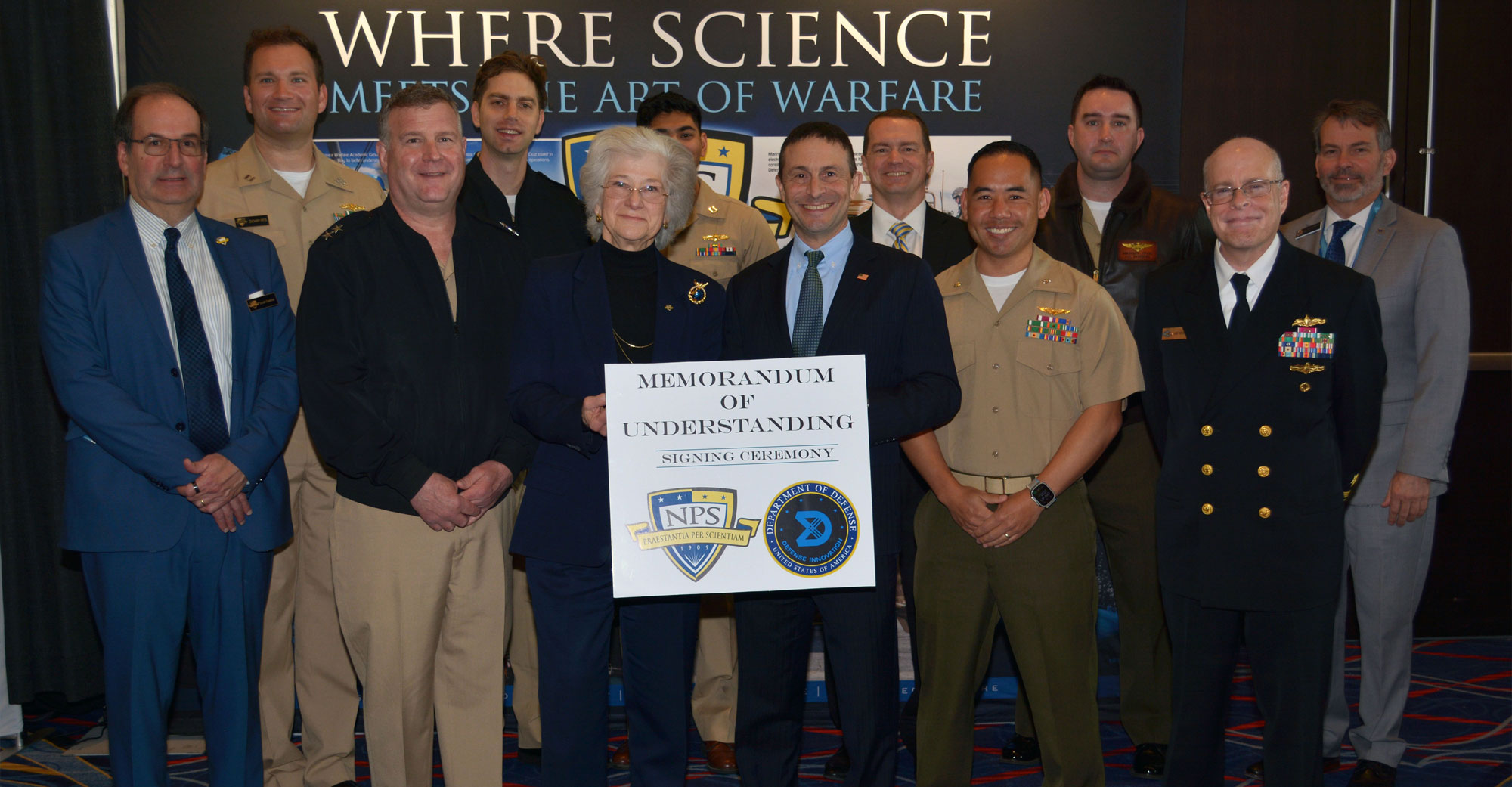
On 10-12 May 2009 the Centre for Geopolitical Studies, Vilnius, Lithuania, hosted a workshop entitled “NATO’s Deterrence Challenges.” This workshop was co-sponsored by the NATO Nuclear Policy Directorate, the Lithuanian Ministry of Defense, the Centre for Geopolitical Studies, Vilnius, and the Advanced Systems and Concepts Office of the Defense Threat Reduction Agency in Fort Belvoir, Virginia. Science Applications International Corporation provided administrative support.
The Vilnius workshop participants examined three broad issues:
Requirements for Deterrence—an assessment of potential deterrence challenges, including contingencies and scenarios, and the potential relevance of the full spectrum of policy instruments, from nuclear forces to conventional military assets and non-military capabilities;
Burden-Sharing and Consultations—including the question of improving nuclear risk- and responsibility-sharing arrangements in the Alliance, as well as complementary measures involving missile defenses and other non-nuclear capabilities; and
Arms Control and Disarmament—including the challenge of reconciling the continuing need for nuclear deterrence arrangements with the political imperative to pursue visible and substantive measures in nuclear arms control, disarmament, and nonproliferation.
These three broad issues are central to the Alliance’s current and foreseeable deterrence challenges. This introduction briefly discusses their significance.
Requirements for Deterrence
In the Declaration on Alliance Security at the April 2009 Strasbourg/Kehl Summit, the NATO Allies noted that “Article 5 of the Washington Treaty and collective defence, based on the indivisibility of Allied security, are, and will remain, the cornerstone of our Alliance. Deterrence, based on an appropriate mix of nuclear and conventional capabilities, remains a core element of our overall strategy.” The NATO Allies—and their security partners—are interested in deterrence and defense regarding challenges in addition to the direct attacks against Alliance territory and forces encompassed by Articles 5 and 6 of the North Atlantic Treaty. The Declaration on Alliance Security referred to “new, increasingly global threats, such as terrorism, the proliferation of weapons of mass destruction, their means of delivery and cyber attacks,” as well as “challenges such as energy security” and “instability emanating from fragile and failed states.”[1]
In some cases, security challenges may be state-directed or state-sanctioned, and in other cases non-state actors may be the principal decision-makers that need to be deterred. The instruments of deterrence against state adversaries may extend beyond nuclear forces to involve missile defenses and other non-nuclear military capabilities, and may in some cases include economic, police, surveillance, judicial, and political measures. Moreover, as was noted at an earlier workshop, the Alliance’s current operations are important for deterrence—above all, the Alliance’s most demanding operation at present, that in Afghanistan. NATO is shaping its reputation in combat and in its struggle to establish security in this country.
It is for this reason that the Vilnius workshop included a panel on “Contingencies and Scenarios” as well as one on “Capabilities and Options.” The workshops on NATO and deterrence in 2007-2008 devoted considerable attention to the concept of “tailored deterrence,” but the potential benefits for the Alliance from analysis of this concept have not yet been fully explored.[2] The “tailored deterrence” concept may point the way to deepened understanding of the requirements of deterrence, intellectual and practical.
Burden-Sharing and Consultations
With the accession of Albania and Croatia in April 2009, the Alliance has 28 member states. The continuing enlargement process means that an increasingly smaller proportion of the Allies bears direct nuclear risks and responsibilities. For this reason and others, the following questions are critical for future Alliance policy: How can the Alliance improve its nuclear risk- and responsibility-sharing arrangements? What additional forms of sharing and consultations in the nuclear domain would be substantive and advantageous? How and to what extent are the traditional rationales for nuclear risk- and responsibility-sharing in the Alliance evolving? Fulfilling the “assurance” function of the Alliance’s nuclear deterrence posture remains a critical and closely related challenge.[3]
At the same time, if proposals are implemented as previously planned, the United States and certain European Allies (the Czech Republic, Denmark, Poland, and the United Kingdom) may bear exceptional responsibilities concerning protection for most of the Alliance against long-range missile threats.[4] At the April 2008 Bucharest Summit, NATO heads of state and government tasked the North Atlantic Council in Permanent Session “to develop options for a comprehensive missile defence architecture to extend coverage to all Allied territory and populations not otherwise covered by the United States system for review at our 2009 Summit, to inform any future political decision.”[5]
At the April 2009 Strasbourg/Kehl Summit, Alliance leaders noted that “a future United States’ contribution of important architectural elements could enhance NATO elaboration of this Alliance effort.” They accordingly reaffirmed “the principle of the indivisibility of Allied security as well as NATO solidarity,” and tasked the North Atlantic Council in Permanent Session to formulate “recommendations comprising architecture alternatives . . . for consideration at our next Summit.”[6] The challenge of identifying options for the protection of the Allies in southeast Europe not covered by projected U.S. missile defenses has raised burden-sharing issues that deserve analysis and discussion within the framework of the Alliance’s overall deterrence posture.
More broadly, the Allies remain interested, as they affirmed at the Strasbourg/Kehl Summit, in “transforming . . . forces, capabilities and structures” in order to ensure “the Alliance’s ability to conduct the full range of its missions, including collective defence and crisis response operations on and beyond Alliance territory.” This effort includes the collective defense planning process, the NATO Response Force, and “key enablers, such as mission-capable helicopters, strategic lift and the Alliance Ground Surveillance system.”[7] The Vilnius workshop accordingly included panels on Alliance consultations related to risk- and responsibility-sharing with respect to non-nuclear as well as nuclear capabilities.
Arms Control and Disarmament
Given the political context of the upcoming Review Conference of the Treaty on the Non-Proliferation of Nuclear Weapons (NPT) in 2010, it is timely for the NATO Allies to consider the challenge of simultaneously satisfying two critical imperatives: showing political commitment to nuclear disarmament and maintaining nuclear deterrence capabilities. How can the Alliance reconcile (a) the need to pursue visible and substantive measures in the domain of arms control, nonproliferation, and disarmament and (b) the requirement to maintain and adapt its arrangements for extended deterrence? The Allies agreed on the following statement at the April 2008 Bucharest Summit: “We reaffirm that arms control, disarmament and non-proliferation will continue to make an important contribution to peace, security, and stability and, in this regard, to preventing the spread and use of Weapons of Mass Destruction and their means of delivery. We took note of the report prepared for us on raising NATO’s profile in this field.”[8] The NATO Allies made a similar statement at the April 2009 Strasbourg/Kehl summit, and noted that “The Allies continue to seek to enhance security and stability at the lowest possible level of forces consistent with the Alliance’s ability to provide for collective defence and to fulfil the full range of its missions.”[9]
The report “on raising NATO’s profile” in the field of “arms control, disarmament and non-proliferation” is known as the German-Norwegian initiative within the Alliance. The references to this objective of “raising NATO’s profile” in both the April 2008 and April 2009 Summit Declarations demonstrate that it has gained acceptance throughout the alliance, despite the initial reservations of some allies and the fact that NATO, per se, is not a party to any arms control treaty. The Allies highlighted the “public awareness” aspect of the question in the Strasbourg/Kehl Summit Declaration: “NATO and Allies should continue contributing to international efforts in the area of arms control, disarmament and non-proliferation. We aim at achieving a higher level of public awareness of NATO’s contribution in these fields.”[10]
In April 2009, U.S. President Barack Obama announced that, “To reduce our warheads and stockpiles, we will negotiate a new Strategic Arms Reduction Treaty with the Russians this year.” He added that “this will set the stage for further cuts, and we will seek to include all nuclear weapons states in this endeavor.” Furthermore, he said that his administration will pursue U.S. ratification of the Comprehensive Test Ban Treaty, the negotiation of a fissile material cut-off treaty, the strengthening of the Treaty on the Non-Proliferation of Nuclear Weapons, and “a new international effort to secure all vulnerable nuclear material around the world within four years.” In support of this effort “to lock down these sensitive materials,” he proposed that the Proliferation Security Initiative and the Global Initiative to Combat Nuclear Terrorism be transformed into “durable international institutions” and that “we should start by having a Global Summit on Nuclear Security that the United States will host within the next year.”[11]
How the Alliance and individual Allies will contribute to new efforts in nuclear arms control and disarmament while sustaining the Alliance’s posture for nuclear deterrence and defense calls for careful and far-sighted analysis. The Vilnius workshop included panels on U.S.-Russian arms control prospects and broader nonproliferation and disarmament priorities. Finally, the workshop featured a panel on integrating its findings, notably with respect to reconciling deterrence requirements and arms control priorities. Michael Rühle reached the following noteworthy conclusion in this regard in his paper:
“The ambitious timetable of major non-proliferation events, the continuing need for US extended deterrence, and not least the participatory approach that NATO has chosen to elaborate a new Strategic Concept, provide a complex challenge for the Alliance in as much as they raise expectations about far-reaching change that are unlikely to be met. Hence, rather than hype the new Strategic Concept as a solution for all of NATO’s problems, it will be crucial to manage public expectations. While taking care to avoid perceptions that NATO is insensitive to global non-proliferation concerns, the Alliance should, above all, focus on security rather than on a near-term nuclear disarmament agenda. In any event, as long as NATO remains a nuclear-armed Alliance, it will not escape the charge that it is applying double standards. Yet given the confusion of the new nuclear debate, where some are seeking a nuclear-weapon-free world while others appear to aim at providing for more security in a nuclear world, this is a charge the Alliance can live with. As long as potential adversaries are seeking, maintaining, or expanding WMD capabilities, NATO is well advised to hedge its bets.”
This issue of Strategic Insights includes nine of the papers presented at the Vilnius workshop as well as a report on this workshop:
- “Requirements for Deterrence: Two Challenging Scenarios” by Elbridge Colby;
- “NATO’s Deterrence Requirements: A Lithuanian Perspective” by Kestutis Paulauskas;
- “Reflections on Requirements and Contingencies for a NATO Deterrence or Reassurance Role in the Middle East” by Ariel E. Levite;
- “NATO’s Deterrence Requirements and the Next Strategic Concept: A German Perspective” by Klaus Wittmann;
- “Alliance Requirements for Deterrence: Capabilities and Options for the Next Decade” by Paul Schulte;
- “Spain, Burden-Sharing and NATO Deterrence Policy” by David Garcia Cantalapiedra;
- “Prospects for U.S.-Russian Arms Control and Disarmament: A Russian Perspective” by Sergey Oznobishchev;
- “Nonproliferation, Arms Control and Disarmament, and Extended Deterrence in the New Security Environment” by Joseph F. Pilat;
- “NATO’s Future Nuclear Dimension: Managing Expectations for the Strategic Concept Debate” by Michael Rühle; and
- “NATO’s Deterrence Challenges: Report on a Workshop in Vilnius, Lithuania, 10-12 May 2009” by David S. Yost.
Furthermore, this issue of Strategic Insights features a report on three earlier workshops concerning NATO and deterrence issues: “NATO and Tailored Deterrence: Key Workshop Findings in 2007-2008” by David S. Yost.
David S. Yost is a Professor at the U.S. Naval Postgraduate School, Monterey, California, and a Consultant for Science Applications International Corporation, McLean, Virginia. His publications include NATO and International Organizations (NATO Defense College, 2007), NATO Transformed: The Alliance’s New Roles in International Security (United States Institute of Peace Press, 1998), and The US and Nuclear Deterrence in Europe (International Institute for Strategic Studies, 1999). He was a Senior Fellow at the United States Institute of Peace, Washington, D.C., in 1996-1997, and a Senior Research Fellow at the NATO Defense College, Rome, in 2004-2007.
The views expressed are the author’s alone and do not represent those of the Department of the Navy or any U.S. government agency. Furthermore, the views expressed are not those of SAIC or its clients.
For more insights into contemporary international security issues, see our Strategic Insights home page. To have new issues of Strategic Insights delivered to your Inbox, please email ccc@nps.edu with subject line "Subscribe." There is no charge, and your address will be used for no other purpose. |
1. Declaration on Alliance Security, Issued by the Heads of State and Government participating in the meeting of the North Atlantic Council in Strasbourg/Kehl on 4 April 2009.
2. For background on the three previous workshops, see David S. Yost, “NATO and Tailored Deterrence: Key Workshop Findings in 2007-2008,” a report published in this issue of Strategic Insights. Papers from the April 2008 workshop at the NATO Defense College have been published in the following book: Karl-Heinz Kamp and David S. Yost, eds., NATO and 21st Century Deterrence, Forum Paper no. 8 (Rome: NATO Defense College, May 2009).
3. For a recent discussion, see David S. Yost, “Assurance and US Extended Deterrence in NATO,” International Affairs 85, no. 4 (July 2009): 755-780.
4. The President of the United States has indicated that the future of the proposed U.S. deployment of ballistic missile defense system elements in Poland and the Czech Republic may be largely contingent on Iranian behavior. In April 2009, U.S. President Barack Obama said, “Iran's nuclear and ballistic missile activity poses a real threat, not just to the United States, but to Iran's neighbors and our allies. The Czech Republic and Poland have been courageous in agreeing to host a defense against these missiles. As long as the threat from Iran persists, we will go forward with a missile defense system that is cost-effective and proven. If the Iranian threat is eliminated, we will have a stronger basis for security, and the driving force for missile defense construction in Europe will be removed.” Remarks by President Barack Obama, Prague, Czech Republic, 5 April 2009.
5. Bucharest Summit Declaration, Issued by the Heads of State and Government participating in the meeting of the North Atlantic Council in Bucharest on 3 April 2008, par. 37.
6. Strasbourg/Kehl Summit Declaration, Issued by the Heads of State and Government participating in the meeting of the North Atlantic Council in Strasbourg/Kehl on 4 April 2009, par. 51, 53.
7. Strasbourg/Kehl Summit Declaration, 4 April 2009, par. 42-45.
8. Bucharest Summit Declaration, 3 April 2008, par. 39.
9. Strasbourg/Kehl Summit Declaration, 4 April 2009, par. 55.
10. Strasbourg/Kehl Summit Declaration, 4 April 2009, par. 55.
11. Remarks by President Barack Obama, Prague, Czech Republic, 5 April 2009.