Welcome - Department of Defense Analysis
The mission of the Defense Analysis Department is to arm select US and international military professionals and interagency personnel with the critical thinking skills and specialized knowledge that they will need for waging and prevailing in the complex conflicts under way — and those to come.
Explore the Department

The Department of Defense Analysis is home to three very unique and highly respected graduate programs—the USSOCOM-sponsored Special Operations and Irregular Warfare (SO/IW) program, the USDP-sponsored Information Strategy and Political Warfare program, and the NSW-sponsored Applied Design for Innovation (AD4I) program. In addition, the Department also offers a graduate certificate in Social Network Analysis, Research and Practice.
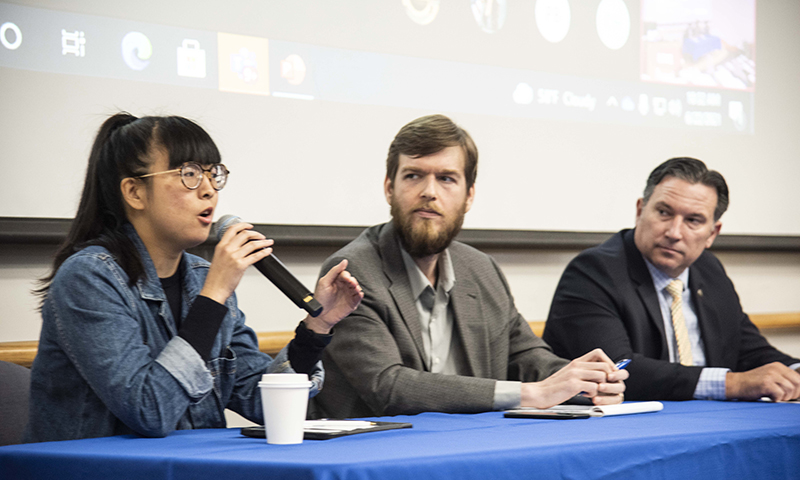
The Defense Analysis Department features an interdisciplinary faculty representing a wide range of academic and operational specialties, purposefully built that way to examine the complexities of irregular warfare and information strategy. The department believes the security challenges of the 21st century cannot be addressed by only one academic discipline
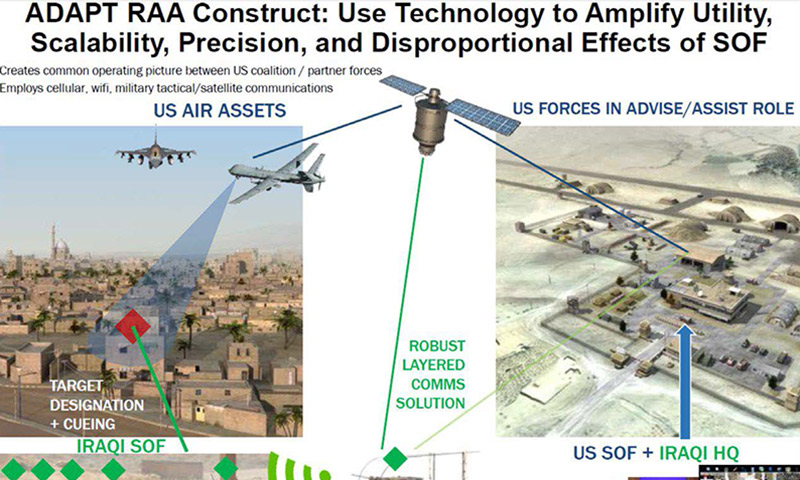
Visit our Research Centers:
Global ECCO
Information Strategy Research Center
CORE Lab
Littoral Operations Center
CODA Lab
Global ECCO
Information Strategy Research Center
CORE Lab
Littoral Operations Center
CODA Lab
Asset Publisher
Upcoming Events
contact us
Contact the DA Department
dainfo@nps.edu
Department of Defense Analysis
(Code DA)
589 Dyer Rd , Room 214
Naval Postgraduate School
Monterey, CA 93943
A MESSAGE FROM THE CHAIRMAN, DR. CARTER MALKASIAN

Welcome to the Defense Analysis Department (DA) at the Naval Postgraduate School. Our traditional motto is, “train for certainty, educate for uncertainty.” In short, educating students is the most important activity we do. Our central focus is preparing our students to perform exceptionally well as leaders in the world they will face after graduation, both in their next assignments, and also for a lifetime.
First and foremost, as a graduate school, NPS inverts the common educational paradigm. At NPS and DA , faculty members contribute to the latest developments in their chosen disciplines, but our focus is on the development of human capital: our students. Bottom line difference: at NPS the faculty work for the students, and all of us together pursue the core national security mission.
Department News
Asset Publisher
Latest Articles
Asset Publisher
Sitting Out of the Artificial Intelligence Arms Race Is Not an Option
April 15, 2022
The race to build autonomous weapons will have as much impact on military affairs in the twenty-first century as aircraft did on land and naval warfare in the twentieth century. Read the article.
A Ukrainian State of Mind
April 13, 2022
In On the Origin of the Species, Charles Darwin wrestled with the question of why people would ever be willing to risk themselves for strangers. Only in 1871, in The Descent of Man, did Darwin find an answer. Read the article.
Faculty Publications
Asset Publisher
The American War in Afghanistan: A History
The American War in Afghanistan is a full history of the war in Afghanistan between 2001 and 2020. It covers political, cultural, strategic, and tactical aspects of the war and details the actions and decision-making of the United States, Afghan government, and Taliban. The work follows a narrative format to go through the 2001 US invasion, the state-building of 2002–2005, the Taliban offensive of 2006, the US surge of 2009–2011, the subsequent drawdown, and the peace talks of 2019–2020.
Outsourcing Duty: The Moral Exploitation of the American Soldier
Are contemporary soldiers exploited by the state and society that they defend? More specifically, have America's professional service members disproportionately carried the moral weight of America's war-fighting decisions since the inception of an all-volunteer force? In this volume, Michael J. Robillard and Bradley J. Strawser, who have both served in the military, examine the question of whether and how American soldiers have been exploited in this way.
Visit us on Social Media
Web Content Display (Global)
Welcome to the official YouTube channel for the Naval Postgraduate School in Monterey, California. For more information about the university, its unique mission and academic programs, visit NPS on the web at http://www.nps.edu.
Naval Postgraduate School
Higher Education
1001-5000 employees
The Naval Postgraduate School (NPS) provided post-baccalaureate education to military officers and other members of the United States defense and national security community. The mission of NPS is to provide high-quality, relevant and unique advanced education and research programs that increase the combat effectiveness of the Naval Services, other Armed Forces of the U.S. and our partners, to enhance our national security.
View more on https://www.linkedin.com/school/nps-monterey/
Official Instagram page of NPS, a graduate research university offering advanced degrees to the U.S. Armed Forces, DOD civilians and int'l partners.
https://www.instagram.com/nps_monterey/