
Welcome - Computer Science
The mission of the Computer Science department is to provide defense-relevant, advanced education and research programs to meet Naval unique needs, and increase the warfighting effectiveness of the U.S. Naval Forces, DoD and allied armed forces.
Explore the Department
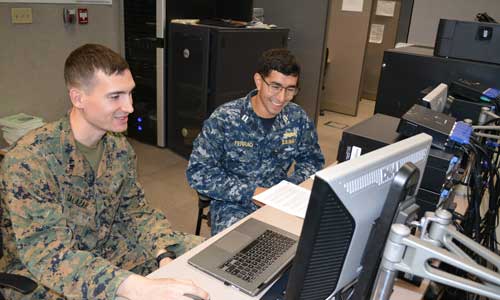
Degree-Granting Programs include:
- MS in Computer Science & MOVES
- PhD in Computer Science & MOVES
- Doctorate in Computer Science
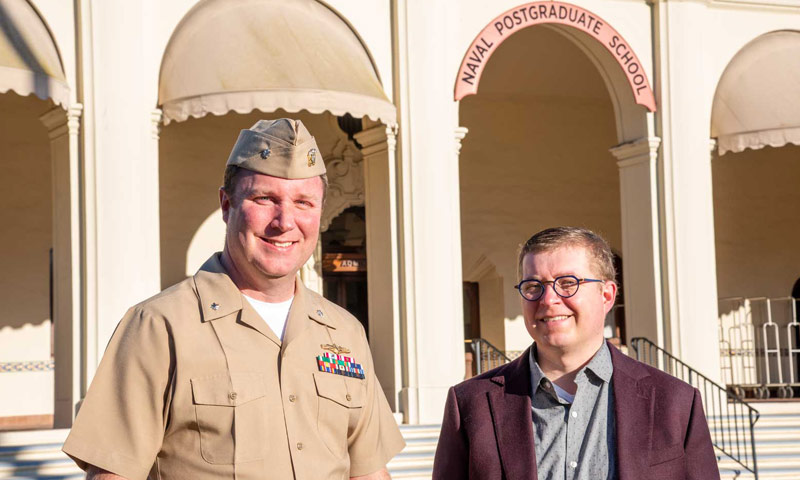
We function as a normal academic department at a research university. Our students learn to be individual thinkers — able to question, provide well grounded assessments, extract the essence of other works, and write well reasoned reports — as they approach national security issues.
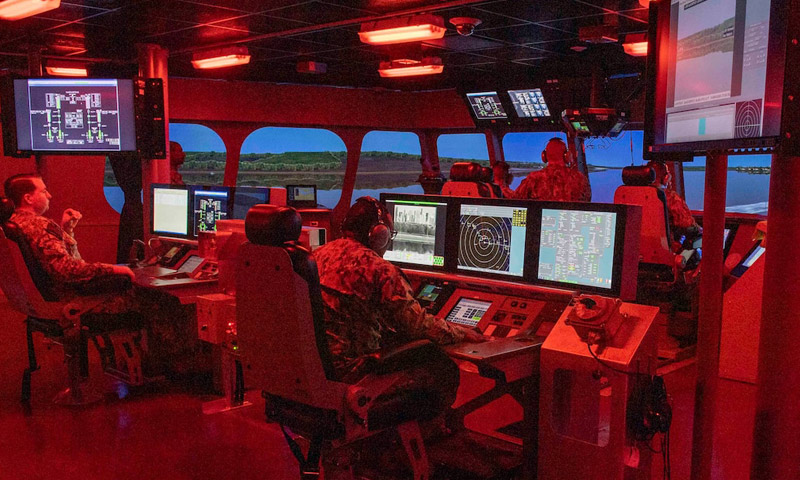
Much of our research is multidisciplinary, involving students and faculty from mathematics, electrical engineering, mechanical engineering, and physics. Our research environment is unique in its blend of theory and practice, and with students' determination to put their thesis results into practice.
Contact Us
Contact Us
Mailing Address:
Glasgow Hall East, Building 305
1411 Cunningham Rd
Monterey, CA, 93943
Phone:
Admin: 831.656.3389, DSN 756-
Program Office: 831.656.7980/7981, DSN 756-
A MESSAGE FROM THE CHAIRMAN, DR. GURMINDER SINGH

Educating our Computer Science masters and doctoral students is the most important activity of the department. Our central focus is equipping our students to perform well as technical leaders in the world they will face after graduation. Complexity and change are dominant characteristics of that world. We develop technical leaders by teaching a principles-based curriculum, around which we build practices for managing complexity and innovation. We conduct an extensive research program that directly enhances national security by increasing the effectiveness of the armed forces of the United States and its allies. Read more.
Asset Publisher
Follow us on Social Media!
Web Content Display (Global)
Welcome to the official YouTube channel for the Naval Postgraduate School in Monterey, California. For more information about the university, its unique mission and academic programs, visit NPS on the web at http://www.nps.edu.
Naval Postgraduate School
Higher Education
1001-5000 employees
The Naval Postgraduate School (NPS) provided post-baccalaureate education to military officers and other members of the United States defense and national security community. The mission of NPS is to provide high-quality, relevant and unique advanced education and research programs that increase the combat effectiveness of the Naval Services, other Armed Forces of the U.S. and our partners, to enhance our national security.
View more on https://www.linkedin.com/school/nps-monterey/
Official Instagram page of NPS, a graduate research university offering advanced degrees to the U.S. Armed Forces, DOD civilians and int'l partners.
https://www.instagram.com/nps_monterey/
Asset Publisher
Great Principles of Computing
Computing is usually viewed as a technology field that advances at the breakneck speed of Moore's Law. If we turn away even for a moment, we might miss a game-changing technological breakthrough or an earthshaking theoretical development.
Tallinn Manual on the International Law Applicable to Cyber Warfare
The product of a three-year project by twenty renowned international law scholars and practitioners, the Tallinn Manual identifies the international law applicable to cyber warfare and sets out ninety-five 'black-letter rules' governing such conflicts.
Alumni Spotlight
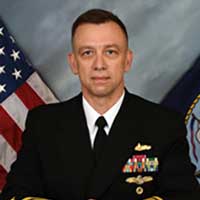
Rear Adm. James Downey, MS in Computer Science '97, was nominated to the rank of vice admiral and to lead Naval Sea Systems Command. If confirmed, Downey will take command of NAVSEA from Vice Adm. Bill Galinas. Downey is currently the program executive officer for aircraft carriers. He was commissioned into the Navy in 1987 after graduating from the State University of New York. He’s a career surface warfare officer and prior to PEO carriers served as the Navy Regional Maintenance Center and the program manager for the Zumwalt guided-missile destroyer program.
Rear Adm. James Downey, MS in Computer Science '97